

Panchakarma Therapy { पञ्चकर्म }
Panchakarma treatment is a unique Ayurvedic procedure that deals with detoxification and rejuvenation to help remove toxins (Ama) from the body and restore the balance of the three doshas—Vata, Pitta, and Kapha. Panchakarma offers numerous benefits, including deep cellular detoxification, improved digestion and immunity, rejuvenation of body tissues, enhanced mental clarity, and effective management of chronic illnesses. It is unique in the sense that it includes preventive, curative, and promotive actions for various diseases.
The word panchakarma means "five actions or five treatments," which are Vamana [वमन॰ Emesis Therapy], Virechan [विरेचन Purgation Therapy], Vasti [वस्ति Enema Therapy], Nasya [नस्य Nasal Administration], and Rakta Moksha [रक्त मोक्ष Purification and Cleansing of the Blood].
Panchakarma is done individually for each person, keeping their specific constitution and disorder in mind; thus, it requires close observation and supervision and should always be administered under the guidance of a qualified Ayurvedic practitioner.
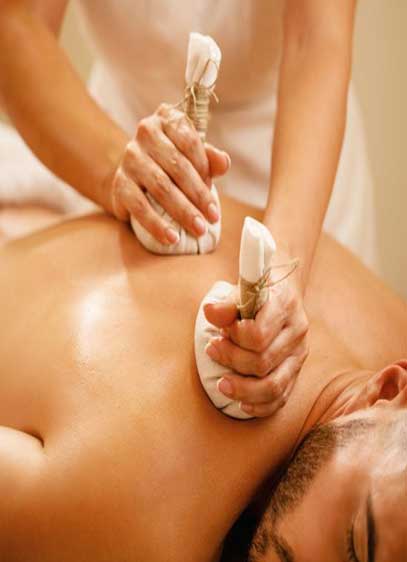
Panchakarma is performed in three stages that methodically lead the body through a variety of therapies, namely Purvakarma [पूर्वकर्म], Pradhanakarma [प्रधानकर्म] and Paschatkarma [पश्चात्कर्म]. Treatment starts with pre-purification [Purvakarma], Measures of Snehan (स्नेहन् an oil massage), and Svedana (स्वेदन sudation or sweating), and then Shodanas [शोदन cleansing methods ] are applied. In the actual treatment, Pradhanakarma, a specialised treatment, is administered to expel impurities and revitalise the system.
In the final stage, Paschatkarma (पश्चात्कर्म), practitioners prescribe a rehabilitation plan with diet, rest, and lifestyle modifications to prevent the recurrence of the disease.
Note: Modern Medicine focuses on diagnosing and treating diseases, while in Ayurveda, the treatment for the
same disease can differ significantly for each person, because Ayurveda focuses on balancing the body, mind, and spirit by considering the
individual’s constitution (Prakriti), imbalances (Vikriti), and the interrelationship between the body and the environment hence
Ayurveda, the treatment for the same disease can vary for different individuals.